Why General-Purpose AI Tools Fall Short in HR
(and How Specialized AI Is Transformative)
Artificial intelligence is changing talent management, but not in the way most vendors claim.
The market is full of AI tools promising faster hiring, smarter career pathing, automated succession planning, and better workforce decisions. Some tools deliver real value. Many do not.
The difference is not the model.
The difference is the quality, governance, and defensibility of the workforce data behind the model.
For HR leaders, the real question is no longer, “Should we use AI in talent management?”
The better question is:
Can we trust the skills, role, and readiness data our AI uses to influence workforce decisions?
That is where most AI talent initiatives break down.
AI can move quickly, but speed does not create confidence. If a system relies on inconsistent job architecture, stale skills data, subjective manager input, or unvalidated self-reported skills, the output may look intelligent while still being impossible to explain or defend.
TalentGuard’s position is simple: AI in talent management only creates enterprise value when it operates on Skills Truth and produces Readiness Intelligence leaders can defend.
That is the foundation of Enterprise Skills Trust and Readiness Intelligence, or ESTRI.
ESTRI gives organizations the decision infrastructure to turn fragmented skills signals into governed, explainable, audit-ready workforce intelligence. It helps HR and business leaders move from AI-assisted activity to talent decisions that are consistent, transparent, and defensible.
For a broader overview of the AI talent management landscape, see our AI in Talent Management pillar page.
What AI in Talent Management Actually Means
AI in talent management refers to the use of machine learning, natural language processing, generative AI, and predictive analytics across workforce processes, including:
- Skills identification and validation
- Job and role architecture
- Career pathing
- Learning recommendations
- Internal mobility
- Succession planning
- Workforce planning
- Readiness assessment
- Talent risk analysis
Used well, AI helps HR leaders see capability gaps sooner, build role profiles faster, recommend development pathways, and identify internal talent that might otherwise be overlooked.
Used poorly, AI accelerates bad decisions.
The difference comes down to whether the organization has governed workforce intelligence underneath the AI layer. AI cannot create trustworthy talent decisions from unreliable skills data. It can only amplify the quality, structure, and governance of the data it receives.
That is why AI in talent management should not begin with automation.
It should begin with trust.
Why AI Talent Management Has Become Urgent
The urgency is real. Skills are changing faster, workforce decisions carry more scrutiny, and organizations face pressure to redeploy talent before capability gaps become business risks.
Three forces are converging.
1. Skills Are Moving Faster Than Traditional HR Systems
Static job descriptions and annual review cycles cannot keep pace with AI adoption, market volatility, and changing business models.
Organizations need a current, structured understanding of what roles require and what employees can actually do.
That requires more than a skills inventory. It requires role-based standards, proficiency expectations, evidence, validation, and governance.
2. Workforce Decisions Are Now High-Consequence Decisions
Promotion, succession, mobility, development, restructuring, and workforce planning decisions now carry legal, regulatory, financial, and reputational consequences.
Leaders must explain not only what decision they made, but why they made it and what evidence supported it.
“The AI recommended it” is not an explanation.
HR leaders need systems that can show the role standard, the skills evidence, the readiness logic, and the decision trail.
3. AI Adoption Is Moving Faster Than AI Governance
Many organizations deploy AI before they define how skills data gets created, approved, refreshed, validated, and audited.
That creates a dangerous gap: AI-influenced decisions without decision infrastructure.
ESTRI closes that gap by giving organizations a governed operating model for skills trust, readiness intelligence, and defensible workforce decisions.
The ESTRI Standard for AI in Talent Management
ESTRI stands for Enterprise Skills Trust and Readiness Intelligence.
It is TalentGuard’s framework for making workforce decisions that are accurate enough to use, consistent enough to scale, transparent enough to explain, and auditable enough to defend.
AI talent management becomes enterprise-ready when it can answer four questions:
- Can we trust what we know about our workforce?
- Can we govern how role and skills standards evolve?
- Can we explain who is ready, for what, and why?
- Can we prove how a talent decision was made?
Those questions map to the four ESTRI pillars.
| ESTRI Pillar | What It Does | Question It Answers | Why It Matters for AI in Talent Management |
|---|---|---|---|
| Skill Trust | Establishes a governed foundation of role-based skills data tied to standards, proficiency expectations, validation methods, and evidence | Can we trust what we know about our workforce? | AI recommendations depend on the quality of the skills data underneath them. Without Skill Trust, every downstream recommendation carries risk. |
| Governance Layer | Controls how role standards, skills definitions, proficiency levels, and assessment logic evolve over time | Can we keep workforce standards consistent as roles change? | AI can accelerate standards drift if teams use different definitions. Governance creates consistency across roles, teams, business units, and geographies. |
| Readiness Engine | Translates governed skills data into explainable readiness for roles, mobility, succession, and workforce planning | Who is ready, for what role, and based on what evidence? | Matching is not readiness. AI becomes useful when it explains skills, gaps, proficiency expectations, and development paths instead of producing a black-box score. |
| Defensible Decisions | Connects talent actions to the evidence chain behind them, from role standard to readiness assessment to decision outcome | Can we explain and defend the workforce decisions we make? | Promotions, succession decisions, mobility moves, and workforce planning actions require more than dashboards. Leaders need a traceable record of why decisions happened. |
This is what allows organizations to explain and defend decisions when executives, employees, auditors, regulators, or legal teams ask hard questions.
Where AI Creates Real Value in Talent Management
AI creates the most value when it strengthens the workforce decision system, not when it simply automates isolated HR tasks.
Skills Intelligence
AI can help identify, structure, and update skills across the workforce. But the value comes from connecting skills to governed role standards and validating those skills with evidence.
A skills inventory tells you what people claim.
Skills intelligence tells you what the organization can rely on.
Intelligent Role Architecture
AI can accelerate job architecture work by generating role profiles, skill requirements, proficiency expectations, and career pathways. This reduces manual effort and creates a more consistent foundation for talent decisions.
But organizations still need governance. Without it, AI creates more content without creating more confidence.
Career Pathing and Development Planning
AI can recommend development pathways based on the gap between an employee’s current skills and a target role.
The strongest recommendations are role-specific, proficiency-aware, and tied to validated skills data.
That is how development moves from generic learning catalogs to readiness-building.
Succession Planning
AI can help identify potential successors by comparing readiness against critical role requirements.
That improves on succession planning based primarily on tenure, visibility, or manager preference.
But succession is a high-stakes decision. Organizations must explain why someone was considered ready, nearly ready, or not ready.
Workforce Readiness Analytics
AI can help leaders see capability risk across teams, functions, and geographies.
It can surface where critical roles lack ready internal candidates, where skills gaps slow execution, and where development investment improves readiness.
This is where AI becomes a strategic workforce planning tool — provided the underlying data is trustworthy.
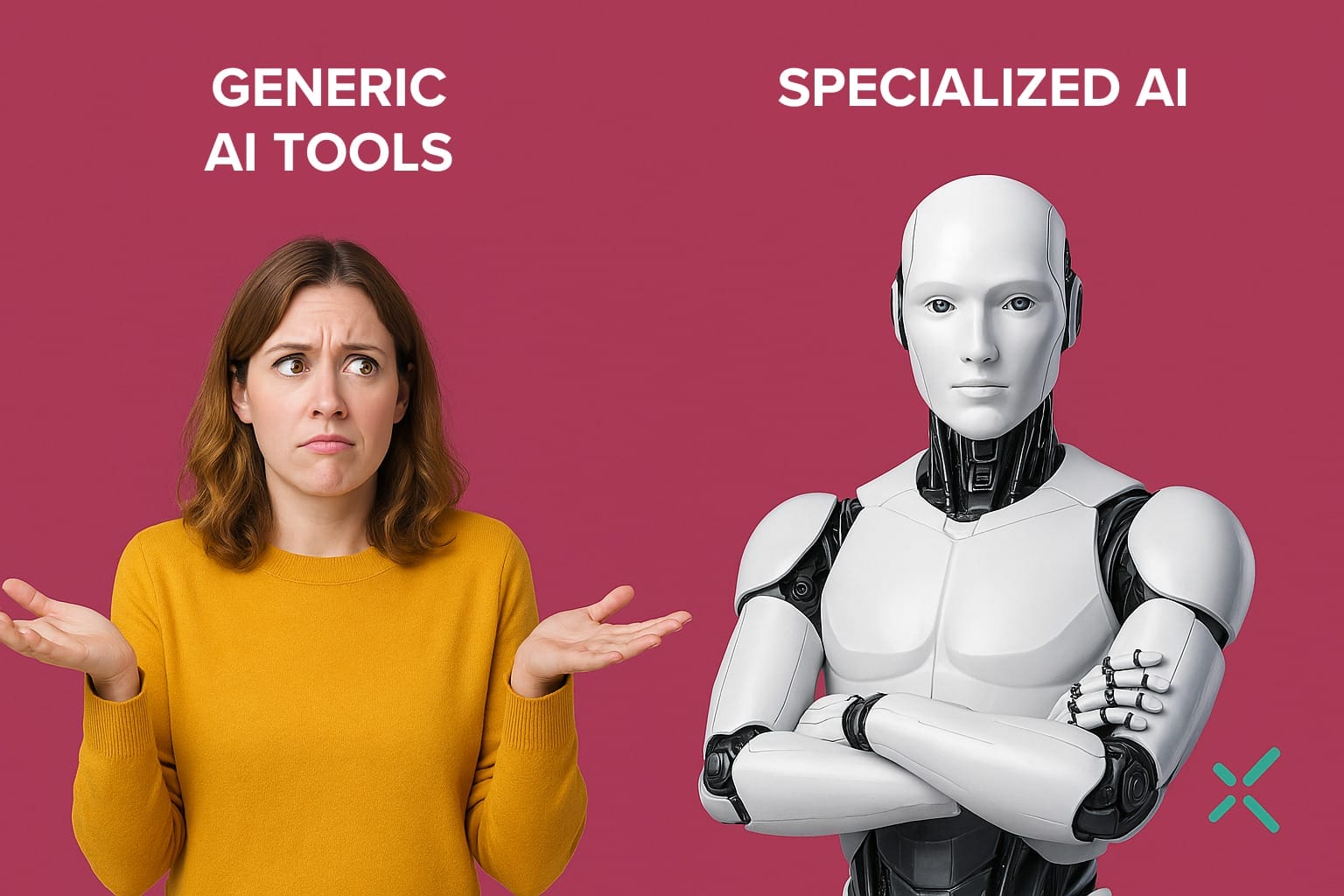
Specialized Talent AI vs. General AI
General-purpose AI tools can help HR teams write job descriptions, summarize feedback, draft development content, and analyze large amounts of unstructured information.
These tools can improve productivity.
But they are not enough for enterprise talent decisions.
Workforce decisions require specialized talent AI built on governed role architecture, skills ontology, proficiency models, validation workflows, and audit trails.
A general AI model may generate plausible output. A specialized talent AI system must produce structured, explainable, role-relevant intelligence that supports real decisions.
The distinction matters most in five areas:
- Role-to-skill mapping
- Proficiency architecture
- Skills validation
- Readiness assessment
- Decision traceability
If a platform cannot show how its AI reached a recommendation, what skills data it used, when that data was last validated, and how the relevant role standard was governed, it is not ready for high-consequence workforce decisions.
The Risk of AI Without ESTRI
AI in talent management creates risk when organizations treat automation as the goal.
The most common failure modes are predictable.
Confident Recommendations Built on Weak Data
If skills are self-reported, outdated, or inconsistently defined, AI recommendations will inherit those weaknesses.
The system may sound precise while operating on partial truth.
Black-Box Readiness Decisions
A readiness score that cannot be explained is not a decision asset.
It is a risk artifact.
Leaders need to understand the evidence and logic behind readiness determinations.
Inconsistent Standards Across the Enterprise
If different teams define the same role differently, AI may reinforce inconsistent talent practices across business units.
That creates fairness, mobility, and audit exposure.
Over-Automation of Human Judgment
The goal of AI in talent management is not to remove human judgment.
The goal is to improve it.
HR and business leaders should make better-informed decisions faster, with clearer evidence and stronger consistency.
ESTRI keeps humans in the loop while giving them a better operating system for workforce decisions.
What HR Leaders Should Ask AI Talent Management Vendors
When evaluating AI talent platforms, do not start with the demo.
Start with the decision system underneath the demo.
Ask these questions:
- How are role standards created, approved, versioned, and maintained?
- How are skills tied to proficiency expectations?
- What evidence supports an employee’s skill profile?
- How does the platform distinguish self-reported skills from validated skills?
- Can readiness determinations be explained in plain language?
- Can the system produce an audit trail for promotion, succession, mobility, or development decisions?
- How does the platform monitor bias, inconsistency, and data drift?
- Does the system help us govern workforce intelligence, or does it simply generate recommendations?
These questions separate useful AI from AI theater.
The Maturity Path: From AI Activity to Defensible Workforce Intelligence
Most organizations do not become AI-mature in one step.
They move through stages.
Stage 1: Governed Workforce Data
The organization establishes role standards, skills architecture, proficiency expectations, and validation methods.
AI helps accelerate the work, but humans still lead decisions.
Stage 2: Assisted Talent Workflows
AI supports HR teams, managers, and employees with recommendations for career paths, development plans, internal mobility, and succession planning.
Stage 3: Bounded Automation
AI begins executing defined workflows within governed parameters.
For example, it may recommend development actions, route skills updates for approval, or surface readiness gaps.
Stage 4: Strategic Workforce Orchestration
AI supports dynamic workforce planning by continuously connecting skills supply, role demand, readiness, and business priorities.
Each stage depends on the one before it.
Organizations that skip the governed data foundation will struggle to trust, explain, or defend what their AI produces.
The Bottom Line
AI has a real role in talent management. It can help organizations move faster, see workforce risk earlier, build better development pathways, and make more informed decisions.
But AI is not a substitute for trust.
The enterprises that win with AI in talent management will not be the ones with the flashiest recommendations. They will be the ones with the strongest workforce decision infrastructure: governed skills data, explainable readiness, and audit-ready evidence.
That is the role of ESTRI.
TalentGuard helps organizations build Skills Truth they can trust, Readiness Intelligence they can explain, and workforce decisions they can defend.
Explore the ESTRI framework to see how governed skills data becomes decision-ready workforce intelligence.
For the full AI talent management overview, visit the AI in Talent Management pillar page.
Read More
Want the broader overview? Read the AI in Talent Management pillar page.
Want to understand TalentGuard’s decision infrastructure? Explore the ESTRI framework.
Want to see how governed skills data supports workforce planning? Read more about skills intelligence and role readiness.
Ready to see TalentGuard’s platform in action? Request a demo.
Frequently Asked Questions
What is AI in talent management?
AI in talent management refers to the use of artificial intelligence across workforce processes such as skills identification, role architecture, career pathing, internal mobility, succession planning, workforce planning, and readiness assessment. The strongest AI systems do more than automate tasks. They help HR and business leaders make better workforce decisions using governed, explainable, and validated talent data.
Why does AI in talent management need governed skills data?
AI depends on the data underneath it. If an AI system uses inconsistent role definitions, outdated skills data, subjective manager input, or unvalidated self-reported skills, it may produce recommendations that look useful but cannot be trusted or defended. Governed skills data gives AI a more reliable foundation for talent decisions.
What is ESTRI?
ESTRI stands for Enterprise Skills Trust and Readiness Intelligence. It is TalentGuard’s framework for turning fragmented skills signals into governed, explainable, audit-ready workforce intelligence. ESTRI helps organizations establish Skills Truth, measure role readiness, govern skills and role standards, and defend talent decisions with evidence.
What is the difference between skills matching and readiness intelligence?
Skills matching compares a person’s skills to a role or opportunity. Readiness intelligence goes further. It considers role requirements, proficiency expectations, validated evidence, development gaps, and decision context. Matching can suggest fit. Readiness intelligence explains whether someone is prepared for a specific role and what gaps remain.
How should HR leaders evaluate AI talent management vendors?
HR leaders should evaluate the decision infrastructure behind the AI, not just the interface or demo. Key questions include how the platform governs role standards, validates skills, explains readiness, tracks decision history, distinguishes self-reported skills from verified evidence, and produces audit trails for promotion, succession, mobility, and workforce planning decisions.
About TalentGuard
TalentGuard powers Enterprise Skills Trust & Readiness Intelligence—so organizations can make talent decisions that are consistent, scalable, and defensible. We turn fragmented skills signals into a governed Skills Truth foundation: role-based standards, proficiency expectations, evidence and provenance, and a complete change history. On top of that foundation, TalentGuard delivers explainable role readiness and gap insights—then connects action loops (development, mobility, performance, succession, and certifications) to measurable progress. The result: a trusted system of record for role and skills data that supports audit-ready reporting, stronger workforce planning, and better outcomes across the talent lifecycle.
Request a demo to see how TalentGuard helps you establish Skills Truth and operationalize readiness intelligence across your enterprise.
See a preview of TalentGuard’s platform

AI-Powered Career Pathing is the Future
The traditional approach to career development—characterized by predictable, linear progressions up a corporate ladder—is becoming increasingly obsolete. For HR professionals new to modern talent management, understanding this shift is crucial to building resilient organizations equipped for future challenges. Today’s progressive HR executives know this, but many still struggle to transition toward more dynamic models. AI-Powered […]

From Skills Gaps to AI-Powered Career Growth
From Skills Gaps to AI-Powered Career Growth: A Roadmap for HR Leaders in 2025. The HR Challenge: Bridging the Skills Gap for a Future-Ready Workforce Every HR leader knows the pain of skills gaps. You have ambitious business goals, but the workforce cannot execute them. The result? Missed opportunities, stalled innovation, and an increased reliance […]
How AI Helps Human Resources (HR) Make Smarter Talent Decisions
The AI Advantage in HR: Human Resources has always been a data-driven function, but traditional methods of managing smarter talent decisions often fall short in today’s fast-paced business landscape. Spreadsheets, manual performance reviews, and static competency models cannot keep up with the rapid evolution of workforce demands. This is where Artificial Intelligence (AI) steps in.