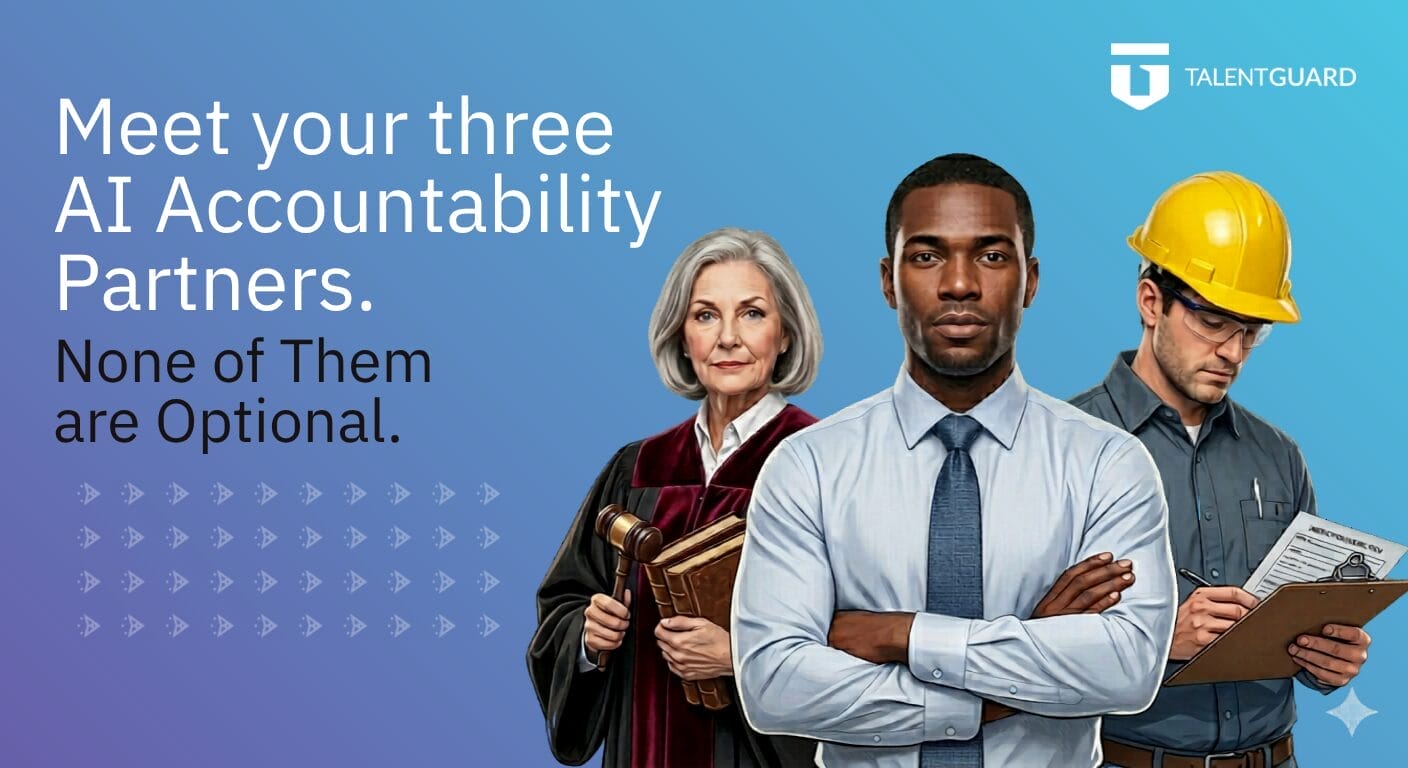
Meet your AI Accountability Partners. None of Them Are Optional.
For a while, the conversation about AI in workforce management stayed comfortable. Vendors promised efficiency. HR teams ran pilots. Leadership nodded at dashboards. Everyone, more or less, agreed that getting smarter about skills data was a good idea, something to figure out over the next few quarters. That window is closing. AI Accountability is coming.
Three very different forces have arrived at the same uncomfortable question about your workforce AI. “Can you explain what it’s doing, and can you stand behind it?” They are not in the same room. One sits in your talent pipeline, one sits in a courtroom and one sits in a federal enforcement office. But they are reading from the same script. And none of them will accept “the AI recommended it” as an answer.
Accountability Partner One: Your Employees
New research from Greenhouse puts a number on something HR leaders have been sensing: 40% of candidates now abandon AI-driven processes entirely. Not because the technology is broken. Because they cannot tell what it is measuring, and they have decided that uncertainty is not worth their time or trust.
That deserves more than a UX fix. Workforce technology that cannot surface clear, explainable criteria for how organizations evaluate, develop, and advance people does not just create friction. It destroys trust. When trust goes, people do not file a complaint. They disengage and sometimes they leave. Either way, you lose them before you know they were gone.
This is a decision quality problem. If your systems cannot show their work, the people inside your organization will notice. So will the people you are trying to bring in.
Accountability Partner Two: The Courts
Earlier this month, a Chinese court issued a ruling that U.S. HR leaders should have on their radar. The court found that an employer cannot use AI adoption as justification for workforce changes without demonstrating retraining efforts and documented governance. In plain terms, the court rejected “the AI said this role was obsolete” as a standalone defense.
That ruling reflects Chinese jurisdiction, not U.S. law. But the logic it establishes already aligns with the direction American courts and regulators have been moving. The emerging standard across multiple jurisdictions holds that workforce decisions informed by AI require an evidentiary foundation. Organizations need to show their work.
For organizations in the middle of workforce transformation, this changes the calculus. An AI system that identifies what is changing is not enough. Organizations also need documentation: what development pathways existed, what retraining was offered, and who made decisions about people and why. Governance is not a legal afterthought. It is the operational prerequisite for everything that comes after.
Accountability Partner Three: Federal Regulators
The EEOC recently settled a case involving workforce termination decisions it found indefensible. The price tag was $1.25 million, plus ongoing compliance monitoring. That second part matters most. The cost of workforce decisions without audit trails extends well beyond the initial fine. It includes the sustained overhead of proving, repeatedly and to an external party, that the organization fixed the underlying problem.
At the same time, advocacy researchers document that women of color hold a disproportionate share of roles most vulnerable to AI-driven displacement. Those researchers are calling for clear standards and accountability in how workforce AI operates. Whether or not formal regulation follows in the near term, the direction is clear. Organizations that build governance infrastructure now will not be scrambling to retrofit it later.
The Thread Running Through All Three
Each of these storylines has moved from theoretical concern to documented consequence.
Employee disengagement from opaque AI systems is a measured behavior, not a hypothetical risk. Legal liability for AI-driven workforce decisions is an established precedent, not a warning. Regulatory enforcement is a case file with a dollar amount attached, not a possibility on the horizon.
The question facing HR and workforce leaders is not whether to take AI governance seriously. The question is whether their current systems give them anything to point to when a skeptical employee, a judge, or a federal investigator demands an explanation.
Skills data is necessary and historically, it has not been sufficient. Organizations need role clarity that is documented, skills criteria that are explainable, and development pathways that demonstrate workforce readiness before something goes wrong, not after.
What “Accountability-Ready” Looks Like in Practice
Accountability-ready is not a certification or a compliance checkbox. It starts with an honest answer to a straightforward question: For every role in your organization, do you know what skills are required, at what proficiency level, and what development pathway exists to help someone get there?
If the answer is “sort of” or “it depends on the manager,” that is where the exposure lives.
WorkforceGPT closes exactly that gap. It generates precision-built role blueprints, complete with skills, proficiency levels, learning paths, and market benchmarks, giving organizations the documented foundation that workforce AI decisions need to stand on. The goal is not to slow transformation down. The goal is to make sure the decisions that transformation produces are ones organizations can explain, defend, and build on.
Three accountability partners are already asking the question. The organizations with a ready answer will be in a very different position than those still searching for one.
See what a defensible role blueprint looks like. Generate your first three free with WorkforceGPT.
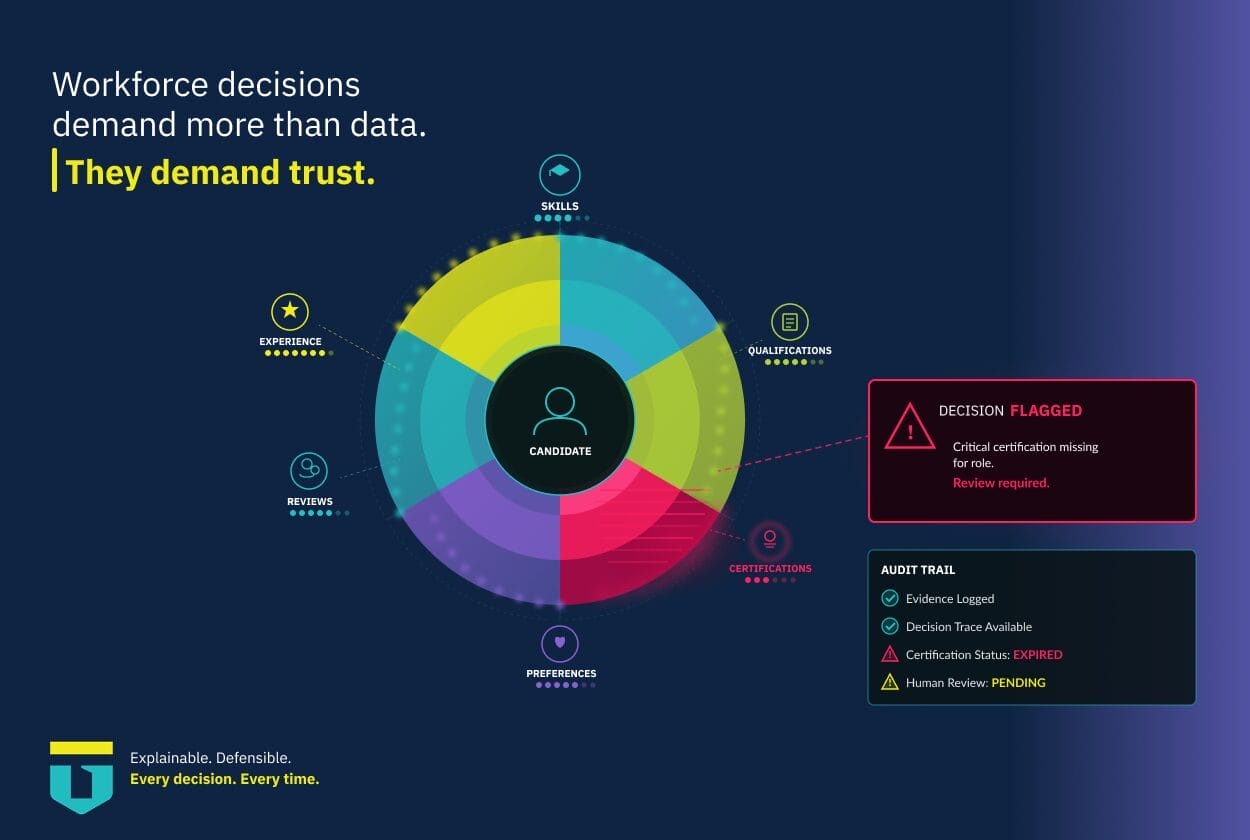
Still have questions? Let TalentGuard show you how to make your governance auditable, your decisions defensible and trust measurable.
FAQs
What does “AI accountability” mean for HR and workforce management?
It means being able to explain, document, and defend any workforce decision that AI helped inform, not just the fact that AI recommended something. This spans three fronts at once: employees who disengage when they can’t understand how a system evaluated them, courts that are starting to reject “the AI decided” as a standalone justification, and regulators who require evidence, not just an AI output, behind decisions like terminations. Accountability-ready means having documented role clarity, explainable skills criteria, and clear development pathways in place before a decision is challenged, not after.
Why are candidates abandoning AI-driven hiring and evaluation processes?
Because they can’t tell what’s being measured, and that uncertainty erodes trust. New research from Greenhouse found that 40% of candidates now walk away from AI-driven processes entirely and it’s not due to broken technology, but due to a lack of transparency into the criteria being applied. The consequence isn’t a formal complaint; it’s quiet disengagement or attrition, which means organizations can lose people without ever finding out why.
Does the Chinese court ruling on AI workforce decisions apply to U.S. companies?
Not directly because it reflects Chinese jurisdiction, not U.S. law. But the underlying logic matters regardless of geography: the court rejected “AI adoption” alone as justification for workforce changes, requiring employers to demonstrate retraining efforts and documented governance instead. That standard — an evidentiary foundation behind AI-informed decisions — aligns with the direction U.S. courts and regulators are already moving, which makes the ruling a useful early signal rather than a binding precedent.
What happened in the EEOC case, and why does it matter beyond the settlement amount?
The EEOC settled a case involving workforce termination decisions it found indefensible, resulting in a $1.25 million penalty plus ongoing compliance monitoring. The monitoring is the more expensive part. This means the organization must repeatedly prove to an external party that it fixed the underlying governance gap, not just pay a one-time fine. It’s a concrete illustration of what happens when workforce decisions lack an audit trail.
What does it actually take to become “accountability-ready”?
It starts with a straightforward test: for every role in your organization, can you say what skills it requires, at what proficiency level, and what development pathway exists to close the gap? If the honest answer is “it depends on the manager,” that’s where the exposure lives. Becoming accountability-ready means documenting that information consistently across roles — role blueprints, explainable skills criteria, and development pathways — so the organization has something concrete to point to before an employee, a judge, or a regulator asks for one.
See a preview of TalentGuard’s platform
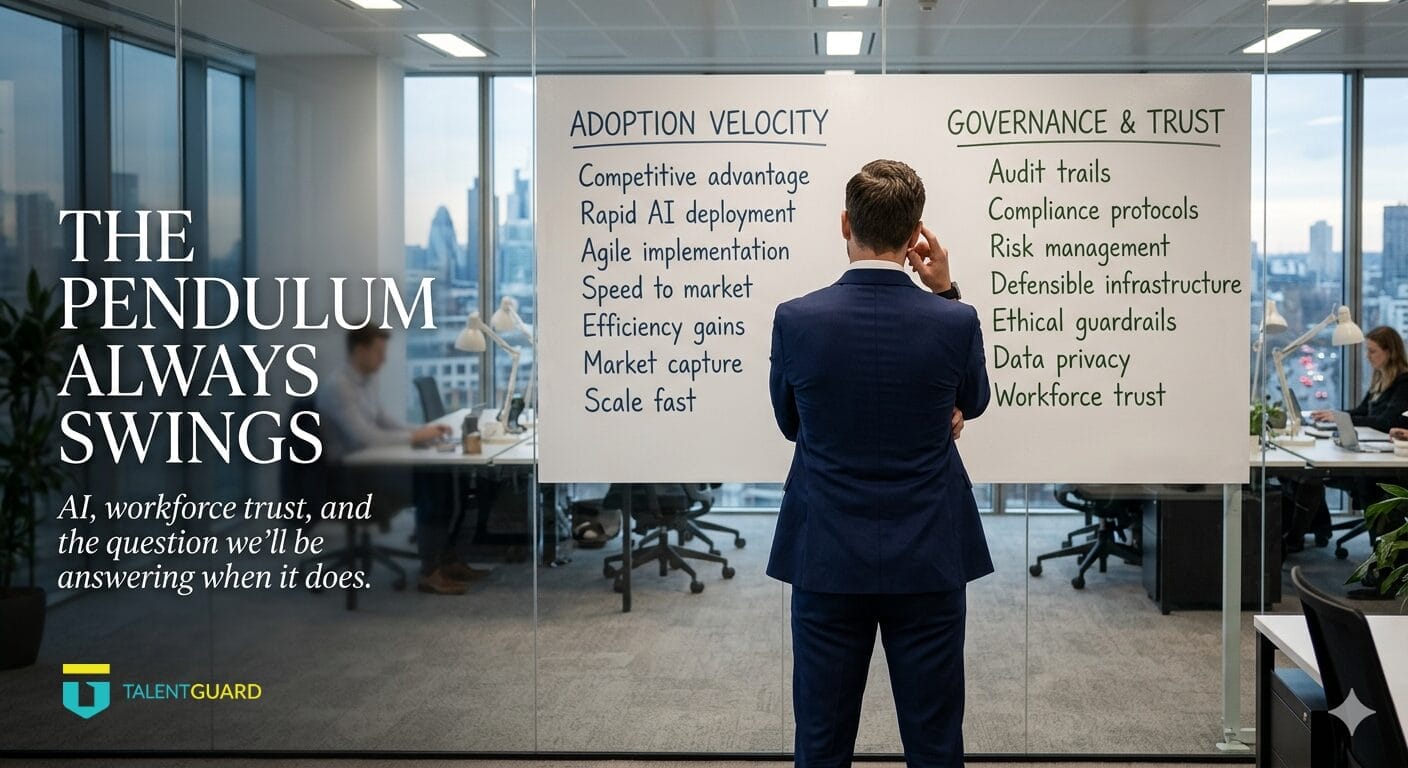
The Pendulum Always Swings, This Time It’s AI Governance
We have been here before. Not with AI governance specifically, but with the particular combination of genuine capability, unchecked optimism, compressed timelines, and the human cost that follows when the accounting finally comes due. The steam engine displaced textile workers before labor law existed to absorb the shock. The assembly line created enormous productivity and […]
Compliance Is a Design Document. Are You Reading It That Way?
Most HR leaders approach AI regulation the same way they approach a compliance audit: head down, running a checklist of things they’re not supposed to do. When a law drops with penalties attached, the first instinct is defensive. There’s a more useful way to read NYC Local Law 144, the EU AI Act, and the […]
When AI Gets HR Wrong: The Accountability Framework Every Talent Leader Needs
The HR technology industry has a contradiction it needs to answer for. These are the companies whose entire market value is built on helping other organizations attract, develop, and retain human talent. They sell workforce intelligence. They advise CHROs on engagement, retention, and the future of work. In the first quarter of 2026, they are […]