The Succession Paradox: 85% Know They Need a Plan, 23% Have One
There is a particular kind of organizational risk that does not show up on a balance sheet until it is already causing damage. It does not trigger an audit or surface in a quarterly review. It sits quietly inside the leadership structure of thousands of organizations right now, waiting.
Deloitte named it earlier this year. They called it the succession paradox.
In a February 2026 survey of 300 business executives, Deloitte Private found that 78% of respondents expect their company to undergo a CEO transition within the next decade. Forty-two percent expect that transition within three to five years. That is not a distant concern. That is the next strategic planning cycle, maybe two.
And yet the same research found a sharp gap between belief and action. While 85% of leaders agree that succession planning is critical to long-term success, only 57% have established a formal plan. Only 23% are actively implementing one. Thirty percent admit they are already behind schedule.
That is the paradox. Nearly every leader understands the importance of succession planning. Far fewer have built the operating discipline to make succession readiness real.
The Succession Paradox Is Not a Knowledge Problem
The Deloitte data does more than expose the gap. It explains why the gap persists.
Among leaders who acknowledge they have fallen behind on succession planning, 62% say the reason is simple: succession does not feel like a critical business priority right now.
That is the problem. Succession planning rarely feels urgent until it becomes urgent.
It does not send a calendar invite or escalate in an inbox. It waits. Then a key executive leaves unexpectedly. A health issue forces a handoff. A competitor recruits the most-ready internal candidate before the organization formalizes anything. A founder steps back faster than expected. A board asks for a CEO transition path and discovers the plan is more assumption than evidence.
At that point, the distance between “we know this matters” and “we built the system to handle it” becomes very expensive.
Why Organizations Know and Still Do Not Act
Succession planning sits in an uncomfortable category of executive work. Everyone agrees it matters. Few feel immediate pressure to operationalize it.
Part of that is simple competition for attention. Revenue, customer issues, cost pressures, transformation programs, and market volatility all demand a response now. Leadership continuity feels important but not immediate. Part of it is politics. Naming potential successors creates expectations. Leaving people off the list creates disappointment. Discussing CEO or senior leadership transitions can feel personal, especially in founder-led or family-owned businesses.
And part of it is how organizations define the task itself. Many treat succession planning as a document rather than a system, something you create, update annually, and file away until the next cycle or the next crisis. The plan exists. The readiness does not.
The Readiness Problem Runs Deeper Than the Plan
Even organizations with a succession plan often discover it is thinner than they thought when they need to use it.
Deloitte found that while 61% of surveyed family businesses report having at least one family member interested in the CEO role, fewer than a quarter believe those individuals are actually ready to assume the position in the near term.
That distinction matters. Having a name on a list is not the same as having a prepared successor. A name tells you who the organization would like to consider. Readiness data tells you whether that person can step into the role, under what conditions, with what gaps, and on what timeline.
This challenge applies well beyond family-owned enterprises. Public companies, private firms, nonprofits, healthcare systems, and government-adjacent organizations face the same underlying problem. They may know who the likely successors are. They may not know whether those successors are ready. That gap becomes dangerous when leadership transitions move faster than development timelines.
Succession Planning vs. Succession Readiness
The language shift matters. Succession planning often describes an event: a process, a meeting, a document, a board update. Succession readiness describes an operating posture — the organization continuously understanding leadership risk, candidate readiness, role requirements, development gaps, and pipeline health.
| Traditional Succession Planning | Succession Readiness |
|---|---|
| Annual or episodic review | Continuous visibility into pipeline health |
| Names listed against critical roles | Candidates assessed against role-specific requirements |
| Relies heavily on manager judgment | Uses skills, proficiency, evidence, and performance signals |
| Focuses on replacement coverage | Focuses on readiness, gaps, and development pathways |
| Often stored in slides or spreadsheets | Maintained in a governed system of record |
| Hard to defend when challenged | Supported by evidence and decision history |
| Reactive when a role opens | Proactive before transition risk becomes urgent |
The better question is not “Do we have a succession plan?” It is “Can we prove who is ready, for which role, by when, and based on what evidence?”
Why Names on a Succession Chart Are Not Enough
Many succession plans look complete because every critical role has at least one name attached to it. That completeness is often an illusion.
A successor list can hide significant readiness gaps. It may not show whether a candidate has led at the required scale, navigated the needed complexity, or developed the skills the next role actually demands. It may not distinguish between someone ready now and someone who might be ready in three years with targeted development or might not be ready at all without it. Most critically, it may not show whether the organization has validated readiness or simply inherited the manager’s opinion.
This is why succession planning fails under pressure. The plan says there is coverage. The transition reveals a lack of readiness.
What Succession Readiness Actually Requires
Effective succession readiness is a structured system that connects roles, skills, evidence, development, and governance. At minimum, four capabilities need to be in place.
Critical role clarity. Organizations need to know which roles create the greatest operational, strategic, financial, or cultural risk if left vacant. That list should extend well beyond the CEO. Leadership risk often concentrates one or two layers below the C-suite, where strategy turns into execution. VP, senior management, technical leadership, regional leadership, and functional roles may carry significant transition risk that never surfaces in a traditional succession review.
Role-specific readiness standards. A job title is not a readiness standard. Organizations need documented role requirements — skills, proficiency levels, experiences, behaviors, and business context — that define what success actually looks like. This is where many succession plans break down. They evaluate candidates based on current performance rather than the requirements of the future role. A high performer in one context may not be ready for a role with greater complexity, broader scope, or higher strategic ambiguity. Readiness must be measured against the target role, not the current one.
Evidence-based candidate assessment. Manager judgment matters, but it should not stand alone. Succession decisions carry more weight and hold up better under scrutiny when they are supported by skills proficiency data, leadership behavior evidence, performance trends, development progress, 360 feedback, and readiness milestones. The goal is not to remove human judgment. It is to give leaders better evidence so that judgment becomes more consistent, transparent, and defensible.
Development pathways with accountability. A succession plan without development is a wish list. Each candidate needs a clear pathway that identifies what they must build, how progress will be measured, who owns the plan, and when readiness should improve. That work rarely happens through a single leadership course. It happens through stretch assignments, executive coaching, cross-functional exposure, mentoring, and operational rotations — each targeted to close specific gaps between current capability and future role requirements.
The Hidden Cost of Waiting
Succession gaps rarely remain isolated. When organizations wait too long, they create second- and third-order consequences that compound quickly.
A leadership transition without a ready internal successor can slow strategic execution, unsettle employees and investors, force expensive external searches, create internal competition, and cause high-potential leaders to leave when they see no clear path forward. In family businesses, the stakes run deeper still succession touches not only business continuity but ownership expectations, family dynamics, governance structures, and long-term legacy. In enterprise organizations, the specific contours look different, but the core risk is the same. When leadership continuity depends on undocumented assumptions, the organization carries hidden exposure it cannot quantify until it needs to.
The danger is that informal confidence gets mistaken for operational readiness. It is not.
From Succession Planning as an Event to Succession Readiness as a System
The succession paradox persists because most organizations treat succession planning as a discrete event. They create a document, update a few names, review it annually, and file it away until the next cycle or the next crisis. That model cannot keep up with leadership risk.
Succession readiness requires a continuous system, one connected to skills architecture, role requirements, career pathing, development planning, performance visibility, internal mobility, leadership assessments, pipeline health, and board reporting. When succession becomes part of the ongoing rhythm of talent development, the organization no longer has to remember to act. The system keeps the risk visible.
How TalentGuard Supports Succession Readiness
TalentGuard‘s succession planning software helps HR leaders and managers move from static succession plans to real-time succession readiness.
The platform gives organizations continuous visibility into pipeline health, candidate readiness, leadership gaps, and development progress so leaders can identify where succession risk exists before a transition forces the issue. TalentGuard supports the full readiness cycle: role-based leadership standards, skills and proficiency expectations, candidate gap analysis, development pathways, internal mobility visibility, pipeline health reporting, and audit-ready decision trails.
That last point matters more than it might appear. Succession decisions require trust. Leaders need to know not only who appears on a succession chart, but why that person is ready, what gaps remain, and what evidence supports the decision. TalentGuard makes that case supportable and keeps it current.
What HR Leaders Should Ask About Their Succession Process
If succession planning feels important but not urgent, that feeling is itself the warning sign. A useful pressure test starts with direct questions:
- Which roles create the greatest risk if they open unexpectedly?
- Do we have ready-now successors for those roles?
- How do we define “ready” for each role?
- What evidence supports each readiness rating?
- Which candidates are ready in one year, two years, or three years?
- What development gaps are delaying readiness?
- Who owns each development plan?
- How often does readiness data update?
- Can we explain the succession decision to the board?
- Can we defend the process if challenged?
If the organization cannot answer those questions, it doesn’t have succession readiness. It has good intentions.
The Bottom Line
Most leaders know succession planning matters. Far fewer have built the system to make it real before they need it.
Leadership transitions do not wait for organizations to feel ready. They happen when markets shift, executives leave, health issues emerge, founders step back, boards intervene, or competitors recruit key talent away. The organizations that navigate those moments well are not lucky. They built readiness before the transition. They know which roles matter most, who is ready, what gaps remain, how development is progressing and can explain the decision because they have the evidence.
That is the shift from succession planning to succession readiness. The organizations that make it will not be surprised.
The ones that do not may find themselves searching for an emergency succession plan template at the worst possible moment, which, in succession planning, is always.
TalentGuard’s succession planning software gives HR leaders and managers real-time visibility into pipeline health, candidate readiness, and leadership gaps, so succession readiness is not a fire drill but a standing practice.
Read More
Want to move from static succession charts to measurable readiness? Explore TalentGuard’s succession planning software.
Want to understand how role-based standards support better leadership decisions? Read more about Skills Truth and role readiness.
Want to connect succession planning with internal mobility and development? Learn how readiness intelligence helps organizations close leadership gaps before roles open.
Ready to see TalentGuard in action? Request a demo.
About TalentGuard
TalentGuard powers Enterprise Skills Trust and Readiness Intelligence — so organizations can make talent decisions that are consistent, scalable, and defensible. We turn fragmented skills signals into a governed Skills Truth foundation: role-based standards, proficiency expectations, evidence and provenance, and a complete change history. On top of that foundation, TalentGuard delivers explainable role readiness and gap insights, then connects action loops, development, mobility, performance, succession, and certifications, to measurable progress. The result is a trusted system of record for role and skills data that supports audit-ready reporting, stronger workforce planning, and better outcomes across the talent lifecycle.
Request a demo to see how TalentGuard helps you establish Skills Truth and operationalize readiness intelligence across your enterprise.
FAQs
What is the succession paradox?
The succession paradox is the gap between leaders knowing succession planning is critical and organizations failing to actively implement it. Most leaders agree the work matters. Far fewer maintain a formal, active, evidence-based process for building and tracking successor readiness.
Why do organizations delay succession planning?
Succession planning rarely feels urgent until a transition is already underway. Other business priorities crowd it out, succession conversations can feel politically sensitive, and many organizations treat the task as a document rather than a system. The result is a planning gap that only becomes visible when the organization needs a successor.
What is the difference between succession planning and succession readiness?
Succession planning typically refers to identifying potential successors for key roles. Succession readiness goes further — measuring whether those candidates are actually prepared, what gaps remain, what development is required, and what evidence supports the assessment.
Why are names on a succession chart not enough?
A succession chart shows who may be considered for a role. It does not prove readiness. A strong succession process defines role requirements, assesses candidates against those requirements, validates readiness with evidence, and tracks development progress over time.
How does TalentGuard help with succession planning?
TalentGuard helps organizations move from static succession plans to continuous succession readiness. The platform supports role-based standards, skills and proficiency expectations, readiness assessments, candidate gap analysis, development pathways, pipeline health visibility, and audit-ready decision trails.
See a preview of TalentGuard’s platform

Your 2030 Leaders Need Development
Most talent review processes are built around a trigger: someone announces they are leaving. That’s the problem. By the time the departure is visible, the readiness gap has already been forming for years. And if your organization is like most, that gap is not sitting at the top of the house. It’s sitting one or […]
The End of “High Potential”: Why Boards Are Demanding Readiness Proof
For decades, succession planning lived in the comfortable ambiguity of potential, with little real visibility into succession planning readiness. Boards would convene, HR would present a slate, and somewhere in the conversation, a similar phrasing would emerge: she has what it takes. He’s a natural leader. Give it two years. That era is ending. New […]
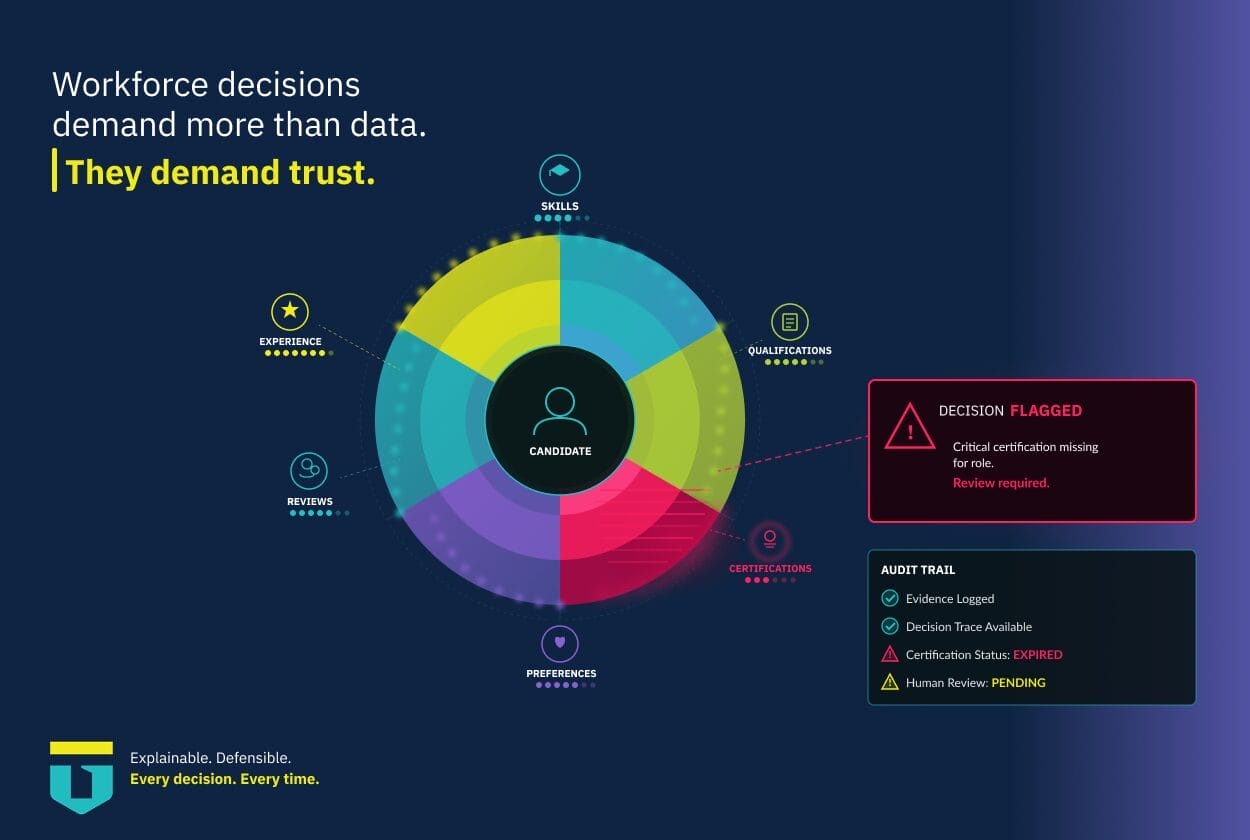
When AI Gets HR Wrong: The Accountability Framework Every Talent Leader Needs
The HR technology industry has a contradiction it needs to answer for. These are the companies whose entire market value is built on helping other organizations attract, develop, and retain human talent. They sell workforce intelligence. They advise CHROs on engagement, retention, and the future of work. In the first quarter of 2026, they are […]