Development Planning Software
Development Planning that Closes Gaps
Not Just Tracks Activity
TalentGuard Development Planning turns verified skill gaps, role expectations, and assessment results into structured, accountable development plans — with every goal connected to the skill it improves, every action tied to the readiness outcome it produces, and every plan traceable in a complete audit record.
Most Development Plans Are Activity Logs.
Not Gap-Closure Systems.
The enterprise development planning problem is not a shortage of effort. Most organizations invest significantly in learning programs, development conversations, and goal-setting cycles. The problem is that the effort is rarely connected to what actually needs to change — the specific, verified skill gaps that stand between an employee’s current state and the role they are being developed toward.
Plans Disconnected from Verified Gaps
When development goals are set in a vacuum — without grounding in assessed skill gaps against governed role standards — employees work on things that may not move the readiness needle. Investment is diffuse. Progress is unmeasurable against what the role actually requires.
Manager-Dependent Inconsistency
Without structured tooling, IDP quality varies entirely by manager capability. Some employees receive thoughtful plans; most receive none at all.
No Skill-to-Goal Traceability
Most development tools track goal completion. Few track which skill each goal is intended to improve and whether it did. Without that connection, development plans cannot demonstrate ROI, cannot feed readiness scores, and cannot support the argument that a development investment produced a specific readiness outcome.
Activity Without Accountability
Goals set without structured milestones, manager visibility, and automated follow-through drift. The plan exists. The actions don’t happen. The gaps don’t close. And the next succession review or performance conversation finds the same gaps that existed 12 months earlier — with no traceable explanation for why.
“Only 25% of organizations have a clear view of their current workforce capabilities. Fewer still can demonstrate individual development progress with any degree of rigor.”
Gartner, Future of Work Reinvented
Development Planning Is Where
Identified Gaps Become Closed Ones
Talent Assessment identifies and verifies the skill gaps that exist between an employee’s current proficiency and their role’s governed standard. Career Pathing maps the route to the next role and surfaces the specific gaps that must close to get there. Performance Management evidences how competency development is progressing over time.
Development Planning is the Readiness Engine module that converts all of that intelligence into action. It is the structured, accountable system that takes a verified gap and assigns it a goal, connects that goal to a learning resource or developmental activity, tracks progress against it, and produces a traceable record that confirms the gap was addressed — not just that activity occurred.
Without Development Planning, readiness gaps are diagnosed but never systematically closed. The Assessment identifies the problem. Career Pathing frames the destination. Development Planning is what gets the employee from one to the other, with accountability, structure, and an evidence trail that every downstream module depends on.
Closes it.
Converts verified gap intelligence into structured, trackable actions that produce measurable movement toward role readiness — with every step connected, every outcome traceable, and every plan audit-ready.
What Governed Development
Planning Means
A Gap-Closure System — Activated from Real Talent Signals.
Governed development planning is the practice of assigning structured, skill-connected goals to verified readiness gaps — through a tracked, accountable process that produces an auditable record connecting every development action to the capability outcome it is intended to produce.
In TalentGuard, development plans are not built from blank templates or generic development menus. They are activated directly from talent signals — Talent Assessment results, Career Pathing gap analysis, Performance Management competency ratings, and Succession Planning readiness thresholds — ensuring that every goal exists because a specific, verified gap exists, and that progress against the goal is tracked against the skill it is closing.
An IDP Is Not
- An annual form completed during performance reviews
- A wish list of training courses
- A manager’s subjective assessment of potential
- A compliance checkbox with no follow-through
An IDP Is
- Gap-Activated: Every development goal originates from a verified talent signal — a skill gap, career pathway requirement, succession readiness threshold, or performance rating that identifies a development priority.
- Skill-to-Goal Traceability: Each goal links to the specific skill it develops. Learning resources and activities connect to the same skill, creating a traceable record of capability growth — not just completed tasks.
- Structured Milestones and Accountability: Goals include defined actions, milestones, and timelines. Manager visibility, automated reminders, and feedback loops keep progress active throughout the year.
- Audit-Ready Progress Record: Every goal, milestone, feedback exchange, and status update is time-stamped and attributed, creating a complete development record available for talent reviews, succession planning, and compliance audits.
What TalentGuard IDP Software does
Six integrated capability areas that together create a governed, evidence-based development process — from initial skills assessment through to board-level readiness reporting.

Competency-Based Planning
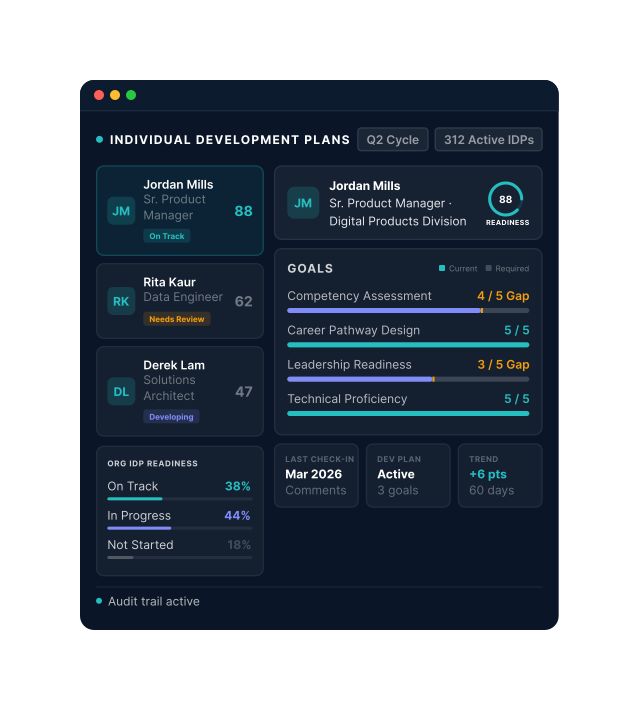
Every IDP is grounded in role-specific competency requirements — not generic templates. Skills gaps are automatically calculated from validated assessments, removing subjectivity from the planning process.

Unified View
All workforce signals converge into a single development plan. TalentGuard aggregates readiness gaps, skill assessments, performance, and certifications into one governed development roadmap—giving employees and managers a single place to see what to learn, why it matters, and how it advances role readiness.

Goal Management
Development goals are structured, time-bound, and linked to specific competency outcomes. Employees manage learning actions; managers maintain structured review cadences. Progress is never invisible.

Learning Integration
Connect assigned development actions directly to curated learning resources — internal LMS content, external providers, and experiential learning opportunities — ensuring plans are immediately actionable.

Readiness Analytics
Aggregate IDP data into organizational intelligence: team readiness scores, succession bench depth, skills gap heatmaps, and development velocity metrics — all in real time.

Audit Trail
Every development conversation, plan revision, assessment result, and learning completion is logged with timestamp and actor — creating a complete, immutable record of workforce development activity.